
Description
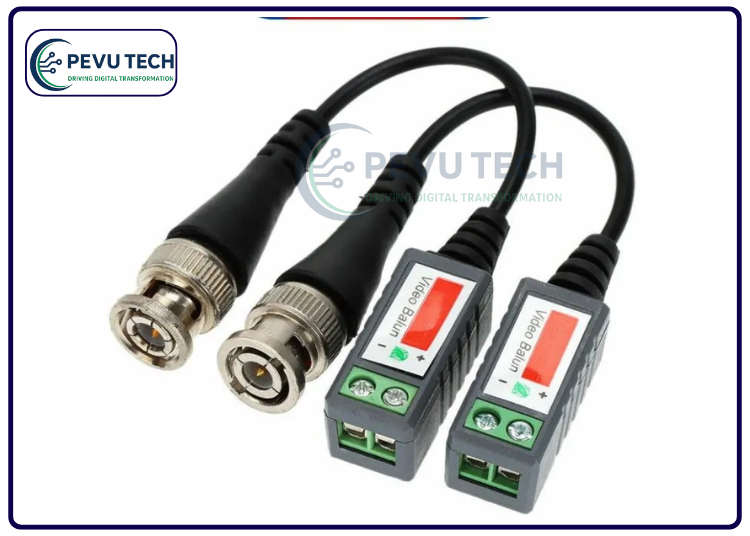
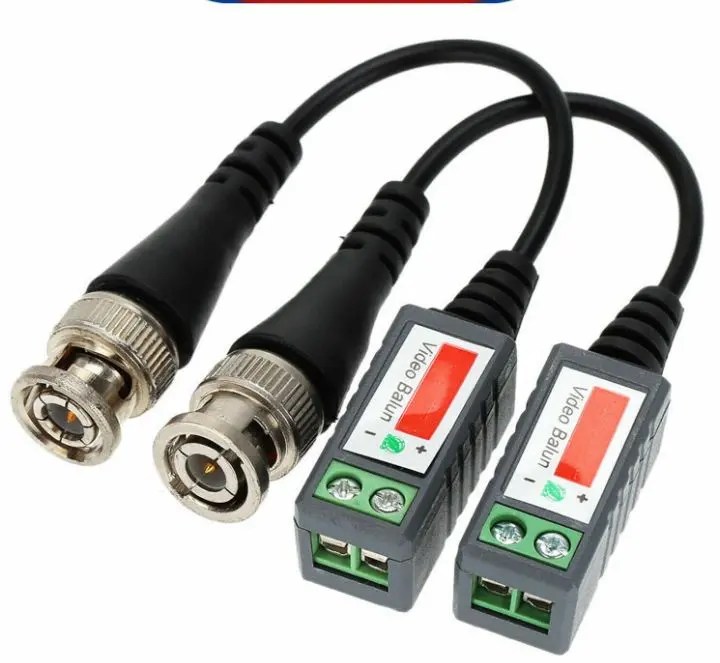
A video balun is a device that allows transmission of CCTV video (and in many cases power/data) over UTP cable (like CAT5e/CAT6 twisted-pair) instead of traditional coaxial cable. In CCTV context, it converts the unbalanced video signal (from coaxial cable) to a balanced signal suitable for twisted pair wiring.
Why use one?
-
Cost savings: UTP cable is typically cheaper and more flexible than RG59/RG6 coaxial.
-
Longer cable runs: Many baluns allow longer distances of transmission over UTP than standard coax. For example, passive baluns can support hundreds of metres depending on resolution.
-
Flexibility: Installers can reuse existing network or telephone wiring (twisted pair) for video/surveillance lines.
Many models support modern HD-CVI/TVI/AHD formats up to 4-5 MP resolution; active versions add powered amplification for very long distances.
Typical features (vary by model) include:
-
BNC connector (or RCA) input/output for the camera/recorder side
-
Screw-terminals or RJ45 input for UTP cable
-
Some models also carry power (12 V DC or 24 V AC) or data (RS-485) for PTZ cameras.
Installation generally requires one balun at each end of the UTP run (camera end + recorder end) if transmitting only video (passive type). Power/other signals may need separate lines or baluns.
In short, video baluns are a practical accessory for surveillance systems, especially when wiring flexibility and cost-efficiency matter.




Reviews
There are no reviews yet.